
What Does Liquid Iron Do for Lawns?
Iron is a micronutrient essential for chlorophyll production, which gives the grass plant its green color. When liquid iron is applied to the lawn, it creates a dark green color that is very noticeable and does not encourage excessive top growth that increases mowing frequency. Liquid iron fertilizer in chelated form can be absorbed through the foliage and roots so that color change can be observed in as little as 24 - 48 hours. Iron deficiency causes the grass plant to turn and off color yellow and is better known as chlorosis. Even though the soil and grass plant may have adequate amounts of nitrogen, an iron deficiency can still turn the grass off color. To correct chlorosis, an application of liquid iron fertilizer does the trick.
Sufficient levels of iron in your lawn support photosynthesis and overall grass metabolism, which can assist in increasing density and stronger rooting systems. Additionally, the absorption of iron can help the grass plant to withstand environmental stresses. Liquid Iron fertilizer is absorbed through the leaf tissue immediately and does not have to go through a breakdown phase like granular iron products. Therefore, liquid iron fertilizers are available to the grass plant faster and produce rapid results.
There are some things to know about liquid iron lawn fertilizers before applying. First, liquid iron does not increase rapid or excessive growth. It does not stimulate leaf growth when it is used alone. Applying liquid iron fertilizer at an increased rate above label recommendations and cause green turf to turn black and appear burned. Caution must also be exercised when applying to hard surfaces such as concrete or house exteriors because it will stain. Should the liquid iron be oversprayed onto these surfaces, rinsing off should take place immediately to remove the liquid before it dries. Applying a lot of water on the overspray area is ideal. The soil pH must be in the optimum range of 6.0 - 7.0 for liquid iron fertilizer to work properly.
The main reasons for applying liquid iron fertilizer are to deepen the green color without excessive growth. This gives a pleasing aesthetic feature on professional sports fields and high-profile lawns. Liquid iron fertilizer applications will correct an iron deficiency within the grass plant. Iron can improve overall lawn vigor and increase stress resistance if levels are adequate. Iron is very helpful in the spring to assist in earlier green-up and extending color in the fall.
Liquid Iron vs Nitrogen Fertilizer: Which Is Better for Spring Green-Up?
Benefits of Nitrogen Fertilizer in Spring for Turf
Nitrogen and iron perform different tasks once applied to the lawn. Nitrogen is the primary source of green color, leaf growth, and turf vigor. It is a core component of chlorophyll production and proteins required for spring growth. Applying nitrogen in the spring does help the lawn green up faster, increase density, and recover from winter injury and dormancy. Iron is a micronutrient that also forms chlorophyll, which increases leaf color, but it does not increase the overall growth of the grass plant. It can also darken the green in the leaf tissue, but the difference between nitrogen and iron is the contribution to plant growth.
Benefits of Iron Fertilizer in Spring for Turf
Nitrogen drives growth and color, while liquid iron fertilizer targets increased green color. Iron can help maintain a good and healthy color throughout the growing season, while not increasing the mowing frequency. Nitrogen will increase mowing frequency as it pushes new growth and turf density.
Best Fertilizer for Spring Green-up
Nitrogen is better for spring green-up because spring green-up is about kick-starting growth after winter dormancy. Nitrogen stimulates new leaf growth and color once soil temperatures increase in the spring months. Liquid iron fertilizer is not the primary nutrient for spring green-up. However, if your lawn needs an increase in green color without rapid growth, then liquid iron fertilizer will meet the need. Soil test results that display an iron deficiency can benefit greatly from iron applications.

When to Apply Liquid Iron for Lawns?
The most important rule for applying liquid iron fertilizer is to only apply it when the grass plant is actively growing and able to absorb nutrients. Absorption of liquid iron occurs in the leaf tissue and roots when growth is active. Dormant grass cannot utilize liquid iron fertilizer because there is no active growth of the grass plant. A good indicator of when your lawn would become beneficial to the lawn is when regular mowing takes place. Normally, after 2 - 3 mowing sessions, the application of liquid iron fertilizer is rapidly absorbed with an increase in green color following within 24 - 48 hours.
Seasonal timing by grass type is another indication of when to apply iron. Cool-season grasses such as Kentucky bluegrass, tall fescue, and perennial ryegrass benefit best if applied in the spring after green-up and growth is established. Early fall is the second growth period in which liquid iron benefits the turf before winter. Applications should be avoided when late summer heat is present. Also, avoid applying during times of dormancy in winter. Warm-season grasses have a different time range of application for liquid iron. Turfgrasses such as Bermuda, Zoysia, and St. Augustine benefit greatly if applications are made in late spring throughout the summer months. However, applying before the spring green-up or late fall should be avoided.
The best conditions to apply liquid iron fertilizer are during the cooler parts of the day of either morning or evening hours. Temperatures should be below 85°F so there is no potential for burn or scorching of the leaf tissue. Do not apply during heat waves, drought, or before heavy rainfall. Applications during these conditions can burn the leaf tissue and reduce nutrient effectiveness. Liquid iron is very beneficial and effective when the grass plant is pale or yellow despite adequate nitrogen applications. Soil pH that is high can tie up iron in the soil and make it unavailable to the grass plant. Foliar applications of iron are very beneficial if this condition exists in the lawn. Most of all, if a greener lawn is desired, liquid iron fertilizer is a great nutrient to accomplish this goal.
How Often Should You Apply Liquid Iron?
Most lawns require liquid iron fertilizer to be applied every 3 - 6 weeks during periods of active growth, and also depending on the response of the turfgrass. Lawns that have mild color issues should receive iron every 4 - 6 weeks. This is frequent enough to maintain a strong, green color throughout the growing season for a particular type of grass. Lawns that have a confirmed case of yellowing chlorosis should receive an application every 3 - 4 weeks until the desired color has been achieved.
The frequency can be reduced to every 4 - 6 weeks once the chlorosis condition has improved to satisfaction. Iron deficiency usually occurs in high pH soils, sandy soils, and heavily irrigated soils. Iron should only be applied when the grass is actively growing, and a routine mowing is required to maintain a desired height of cut. Again, the best time for applications depends on what type of grass is actively growing on the lawn, cool-season or warm-season.

How to Tell if Your Lawn Needs Iron?
Iron chlorosis occurs when the lawn cannot absorb and utilize iron effectively. There can be sufficient iron present, but there is no improvement in color after application of nitrogen. Iron deficiency can be determined by the yellowing of the leaf tissue while the veins of the leaf remain green. The leaf blades turn a pale green to yellowish color. The veins of the leaf remain green in a very distinct growing pattern. These symptoms first appear on the new and younger leaf tissue because iron is immobile in plants. Lawns with iron chlorosis often receive adequate levels of nitrogen but continue to look pale or washed out. Sometimes, the mistake of applying more nitrogen is made when it is only an iron deficiency. Iron chlorosis can be severe in high pH or calcareous soils (Calcareous soils are alkaline soils (pH 7.5-8.5+) containing >15% calcium carbonate).
Soils with a pH above 7.2 can be chlorotic and tie up nutrients within the soil. Prolonged iron deficiency can lead to slower growth, thinner turf density, and reduced photosynthesis efficiency. Severe or chronic chlorosis will weaken turf and increase the probability of environmental stresses for the grass plant. Some grass types, such as Kentucky bluegrass, Centipedegrass, St. Augustinegrass, and Zoysiagrass, will display iron deficiencies more than others. This is especially true if the lawn soil is alkaline. The absorption of iron is reduced in cool soil temperatures, excessive soil moisture conditions, and on compacted and poorly infiltration soils.

The Best Liquid Iron Lawn Fertilizer
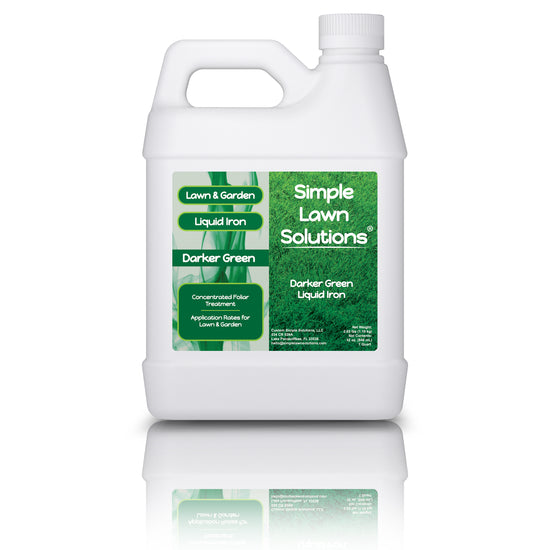
Liquid iron fertilizers that contain a chelated form of iron are best for lawn fertilization. The chelated forms are best for correcting iron deficiencies and chlorotic conditions. Simple Lawn Solutions Darker Green Liquid Iron contains micronutrients like Iron and Manganese to carry out essential plant functions. It supports chlorophyll production and overall turf vigor, which is beneficial for rapid foliar greening. Including one of Simple Lawn Solutions' humic acid products works well in coordination with Darker Green Liquid Iron because it helps the iron be more readily available.
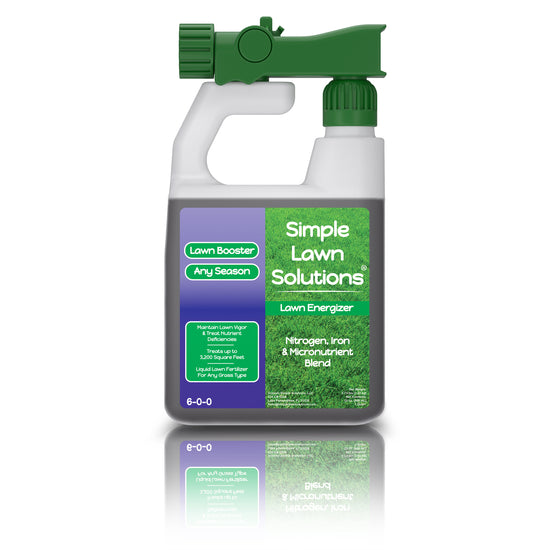
Another Simple Lawn Solutions product that can meet the needs of supplying adequate levels of iron is 6-0-0 Lawn Energizer. Lawn Energizer booster provides essential nutrients needed to darken the green of your lawn. Nitrogen is a major component of chlorophyll, where plants get their green coloring. Nitrogen encourages vigorous growth for the development of a dense, attractive lawn. Iron is essential to the plant’s production of chlorophyll. This concentrated solution is great to enhance and deepen the green of your lawn.

FAQS About Liquid Iron Lawn Fertilizer
Is liquid iron safe for pets?
Allow iron fertilizer products to dry before allowing pets onto the lawn.
Does liquid iron burn grass?
When used correctly, liquid iron will not burn grass. However, if liquid iron fertilizer is applied at a higher rate than recommended, it can burn and turn the grass a blackened purple for days. Iron can burn during hot or drought-stressed conditions.
Can you apply liquid iron and nitrogen fertilizer at the same time?
Yes, Simple Lawn Solutions Lawn Energizer combines 6% nitrogen and liquid iron, but mixing products is generally not recommended unless a jar compatibility test is performed.
How quickly does liquid iron turn grass green?
Most lawns can have a full color response in as little as 24-72 hours and last 2-4 weeks.
Can I use liquid iron in summer?
University turf programs confirm the use of liquid iron in the summer months to generate greening without excessive top growth. However, the risk of burn increases between 85 and 90°F.
Does liquid iron stain sidewalks?
Liquid iron fertilizer can leave a rust colored stain on concrete, pavers, brick, stone, and light-colored siding.
Can I use liquid iron on new sod?
Yes, liquid iron can be used on new sod, but timing, rate, and turf condition should be considered. The sod should be rooted before iron applications. Wait at least 2 weeks after sod installation to get the full effect of the iron application.
References:
-
LSU AgCenter
-
University of Minnesota Extension - Fertilizing Lawns
-
Penn State Extension - Turfgrass Fertilization: A Basic Guide
-
Clemson Extension - Proper Lawn Fertilization
-
University of Wisconsin Extension - Lawn Fertilization and Water Quality
-
University of Florida IFAS - Iron Deficiency in Turfgrass