
Keeping your lawn healthy starts with choosing the right lawn fertilizer, but with so many products available, it can be difficult to know which option is best for your yard. One of the most common questions homeowners ask is whether liquid lawn fertilizer is the right choice for their grass care routine.
Liquid grass fertilizer is designed to deliver nutrients quickly and evenly across your lawn. While some homeowners prefer liquid applications, others choose granular fertilizer depending on their goals, schedule, and lawn conditions.
In this guide, we’ll answer the top questions people ask about liquid lawn fertilizer, such as, including how it works, when to apply it, how often to use it, and how it compares to other types of grass fertilizer, so you can make an informed decision for your lawn.
1. What Is Liquid Lawn Fertilizer?
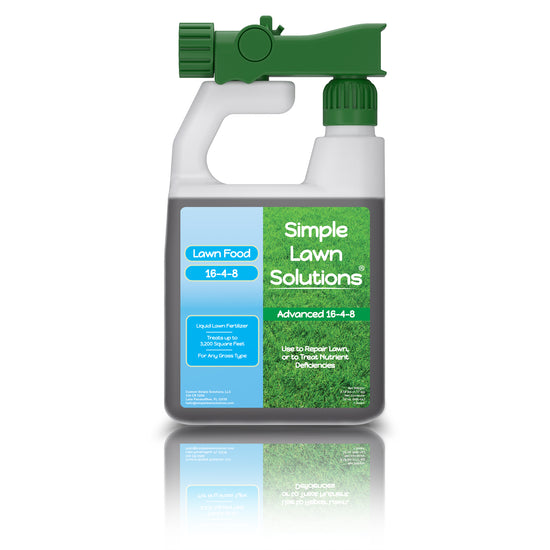
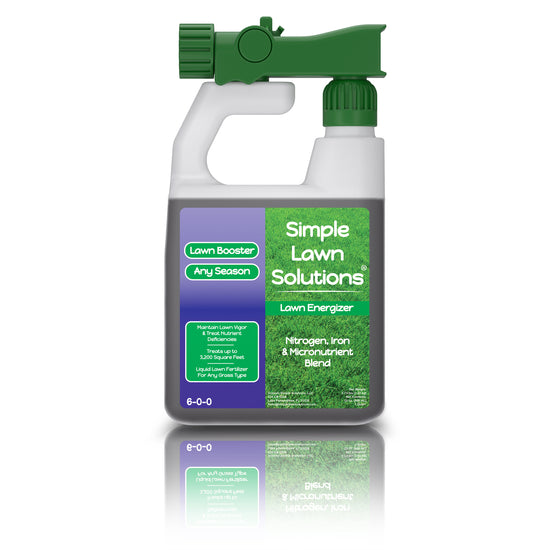
Liquid lawn fertilizer is a type of lawn fertilizer that delivers nutrients to grass through a liquid solution rather than dry pellets or granules. It’s typically applied using a hose-end sprayer, backpack sprayer, or spray system, allowing nutrients to be applied uniformly when equipment is calibrated and used properly.
Most liquid grass fertilizers contain key nutrients like nitrogen (N), phosphorus (P), and potassium (K), which support healthy growth, root development, and chlorophyll production which influences green color. Some products also include micronutrients such as iron, magnesium, or calcium to help improve overall lawn health.
Liquid spray fertilizer nutrients become available more quickly because some nutrients can be absorbed through leaf tissue, while others move into the soil root zone. However, both liquid and granular lawn fertilizers can be effective depending on your lawn’s needs, climate, and maintenance schedule.
Many homeowners choose liquid fertilizer because it can be easier to apply evenly and works well for regular lawn maintenance programs.
2. Is Liquid Lawn Fertilizer Better Than Granular Fertilizer?

Both liquid lawn fertilizer and granular fertilizer can help maintain a healthy lawn, but they work differently and are often used for different purposes.
Benefits of Liquid Lawn Fertilizer
Liquid fertilizer is known for quick nutrient availability and even coverage. Because nutrients are delivered in liquid form, grass can absorb them faster through the leaves and root zone.
Homeowners often choose liquid grass fertilizer for:
-
Faster greening response
-
Easy application with sprayers
-
More uniform coverage
-
Flexible spot treatments
Liquid products are also commonly used during active growing periods when lawns may benefit from more frequent, lighter feedings.
Benefits of Granular Fertilizer
Granular fertilizer is designed to release nutrients more slowly over time. Many products include slow-release nitrogen that feeds grass gradually over several weeks.
Granular lawn fertilizer may be preferred for:
-
Longer-lasting feeding
-
Fewer applications
-
Large lawn coverage
-
Seasonal fertilization programs
Ultimately, the best grass fertilizer depends on your lawn goals, soil conditions, budget, and how much time you want to spend on lawn care.
3. How Often Should You Apply Liquid Grass Fertilizer?
Most liquid lawn fertilizers are applied every 2–4 weeks during the growing season, although the exact schedule depends on the fertilizer formulation, grass type, and climate.
Warm-season grasses like Bermuda or St. Augustine often require fertilization during late spring and summer, while cool-season grasses such as Kentucky bluegrass or fescue are commonly fertilized in spring and fall.
Because liquid grass fertilizer delivers nutrients quickly, applications are generally lighter and more frequent than granular treatments.
To avoid over-fertilizing:
-
Follow product label instructions carefully
-
Avoid applying during drought stress
-
Water appropriately after application if directed
-
Avoid exceeding recommended annual nitrogen rates for your turfgrass species and region
A soil test is the best way to determine which nutrients your lawn may need before starting a fertilizer program. Avoid fertilizing before heavy rainfall or on impervious surfaces to help reduce nutrient runoff into storm drains and waterways.
4. When Is the Best Time to Apply Liquid Lawn Fertilizer?

The best time to apply liquid lawn fertilizer depends on your grass type, weather conditions, and time of year.
Best Time of Day
Morning and early evening are generally considered the best times to apply spray grass fertilizer. Cooler temperatures help reduce evaporation and lower the risk of stressing the grass.
Avoid fertilizing during the hottest part of the day, especially during summer heat.
Best Seasons for Fertilizing
For cool-season grasses:
-
Early spring
-
Early fall
-
Late fall
For warm-season grasses:
-
Late spring
-
Summer during active growth
It’s also important to check the weather forecast before applying fertilizer. Heavy rain immediately after application can reduce effectiveness by washing nutrients away.
5. Does Spray Grass Fertilizer Work Faster?
Liquid lawn fertilizer often produces faster visible turf response compared to many slow-release granular fertilizers.
In many cases, homeowners may notice faster greening within several days after applying liquid fertilizer, especially when soluble nitrogen or iron is included.
However, faster greening does not always mean longer-lasting feeding. Some liquid fertilizers provide short-term nutrient availability and may require more frequent applications to maintain consistent growth.
Healthy lawns still depend on:
-
Proper mowing
-
Adequate watering
-
Soil health
-
Seasonal maintenance
Fertilizer works best as part of an overall lawn care program.
6. Can Liquid Lawn Fertilizer Burn Your Grass?

Yes, any lawn fertilizer, including liquid fertilizer, can potentially burn grass if it is overapplied or used incorrectly. Fertilizer burn typically occurs when excess salts pull moisture away from the grass, causing:
-
Yellow or brown patches
-
Wilting
-
Leaf discoloration
-
Stunted growth
To reduce the risk of fertilizer burn:
-
Follow label rates carefully
-
Avoid overlapping spray patterns
-
Apply during moderate temperatures
-
Water appropriately if recommended
High-nitrogen products generally carry a greater risk of burn if misused. Liquid fertilizers applied during high temperatures or direct sunlight may increase the risk of foliar burn, especially at higher nitrogen concentrations. If fertilizer burn occurs, watering the lawn deeply may help dilute excess salts and support recovery.
7. What Is the Easiest Fertilizer to Apply?
The easiest fertilizer to apply often depends on the size of your lawn and your comfort with lawn care equipment.
Many homeowners consider liquid lawn fertilizer one of the easiest fertilizer options because it can be applied with:
-
Hose-end sprayers
-
Ready-to-use bottles
-
Pump sprayers
-
Backpack sprayers
Spray grass fertilizer can simplify application because nutrients are distributed evenly without needing a spreader calibration.
However, granular fertilizer can also be easy to use on larger lawns with a broadcast spreader.
For beginners, ready-to-spray liquid products are often popular because they:
-
Require minimal setup
-
Apply quickly
-
Reduce cleanup
-
Simplify spot treatments
The best easy fertilizer is one that fits your lawn size, maintenance routine, and comfort level.
Closing Lawn Fertilizer Tips

Liquid lawn fertilizer can be a useful option for homeowners looking for flexible, easy-to-apply lawn care solutions. Whether you choose liquid or granular grass fertilizer, the most important factors are proper timing, consistent maintenance, and using the right nutrients for your lawn’s needs.
Understanding how different fertilizers work can help you build a lawn care routine that supports healthy grass growth throughout the season.
Before applying any fertilizer, consider:
-
Your grass type
-
Local climate
-
Soil conditions
-
Application frequency
-
Lawn care goals
With the right approach, both liquid and granular fertilizer programs can support a greener, healthier lawn.
Looking for fertilizer recommendations or help with your lawn? Take our fertilizer quiz here for custom recommendations in just a few minutes!
Sources
-
University of Minnesota Extension — Fertilizing Lawns
https://extension.umn.edu/lawn-care/fertilizing-lawns -
Penn State Extension — Lawn and Turfgrass Fertilization: A Guide for Homeowners
https://extension.psu.edu/lawn-and-turfgrass-fertilization-a-guide-for-homeowners -
Clemson Cooperative Extension — Fertilizing Lawns
https://hgic.clemson.edu/factsheet/fertilizing-lawns/ -
University of California Agriculture & Natural Resources — Turfgrass Fertilization
https://ipm.ucanr.edu/TOOLS/TURF/FERT/ -
Iowa State University Extension — Fertilizing Lawns
https://hortnews.extension.iastate.edu/fertilizing-lawns -
University of Illinois Extension — Fertilizing Lawns
https://extension.illinois.edu/lawns/fertilizing-lawns -
Purdue University Turfgrass Science — Lawn Fertilization
https://www.extension.purdue.edu/extmedia/AY/AY-22-W.pdf -
University of Missouri Extension — Lawn Fertilizer Timing
https://extension.missouri.edu/publications/g6959 -
Texas A&M AgriLife Extension — Fertilizing Turfgrass
https://agrilifeextension.tamu.edu/library/landscaping/fertilizing-turfgrass/ -
University of Maryland Extension — Lawn Fertilizer Schedule
https://extension.umd.edu/resource/lawn-fertilizer-schedule-table -
Michigan State University Extension — Fertilizer Burn of Lawns
https://www.canr.msu.edu/resources/fertilizer_burn_of_lawns -
Utah State University Extension — Fertilizing Lawns
https://extension.usu.edu/yardandgarden/research/fertilizing-lawns -
Oregon State University Extension — Fertilizing Your Lawn
https://extension.oregonstate.edu/gardening/lawn/fertilizing-your-lawn -
University of New Hampshire Extension — Lawn Fertilizer Fact Sheet
https://extension.unh.edu/resource/lawn-fertilizer-fact-sheet