
Urea is a synthetic form of nitrogen that has been widely used in agriculture, on lawns, in professionally maintained turf, and for gardening. Urea fertilizer is one of the most commonly used nitrogen fertilizers as it contains 46% nitrogen in its most concentrated form. Once urea nitrogen fertilizer has been applied as a lawn fertilizer, it releases fast and gives the grass a deeper green color.
What is Urea Nitrogen Fertilizer?
Urea fertilizer is a synthetic material rich in nitrogen and widely used to promote rapid growth in home lawns. Urea is highly effective for use on lawns, gardens, and other crops and has been used in agriculture since the 1940s. Urea as a fertilizer gained rapid global adoption between the 1960s and 1970s. It was first observed that urea provided a significant boost to leaf growth. Since that time, urea has become a widely used lawn fertilizer worldwide.

How does Urea Fertilizer Work?
Urea works as a fast-acting nitrogen source, but it must undergo several steps before the lawn and other plants can absorb it. Once urea comes into contact with the soil, it is not readily available to plants. Moisture within the soil or otherwise applied starts to dissolve the granular or liquid form of the material. Soil enzymes then convert the urea into ammonium carbonate within a 24-48 hour timeframe. Once the urea has been converted to ammonium, plants can absorb the nitrogen from the urea fertilizer, and they turn green.

Pros of Using Urea Nitrogen for Lawns
Urea contains more nitrogen per pound than any other solid fertilizer. Because of this fact, less product is needed to deliver the same amount of nitrogen. Urea is manufactured in large quantities, which makes it a more affordable nitrogen fertilizer on the market. Once it has been converted to ammonium and nitrate, plants can absorb it more quickly, resulting in rapid greening, vigorous growth, and improved leaf density and color. Urea fertilizer can be used universally on lawns, gardens, crops, hydroponics, and other fertilizer blends. Urea is non-corrosive and compatible with most ingredients, making it suitable for use in coated slow-release fertilizers, liquid nitrogen fertilizers, and granular fertilizers. The salt index is lower than that of other nitrogen fertilizers, making them less likely to cause salt injury to plants.
Cons of Using Urea Nitrogen for Lawns
Although urea fertilizer has many positive effects on greening and increasing plant growth, it also has some adverse effects. Urea that remains on top of the soil for too long and is not watered in can evaporate very quickly. Nitrogen is then lost into the atmosphere, and the intended amount will not be available to perform all of its great benefits. It will become less effective, and the expected results will not occur. Pure urea fertilizer contains 46% nitrogen in its strongest form. This can cause leaf burn, root damage, and dehydration from salt stress, and is not forgiving if the application rate is too high. The conversion process doesn’t work if the soil is too dry, resulting in less breakdown and reduced effectiveness. Urea fertilizer works best when there is sufficient soil moisture, the temperature is moderate, and it is watered in immediately after application. Using urea for indoor planting or houseplants can contribute to excess salts in the soil. This can lead to leaf burn and root stress, ultimately affecting the overall health of the plant.

The Best Time to Apply Urea Nitrogen to Lawns
Urea fertilizer is very beneficial for both cool-season and warm-season grasses. However, proper timing is of the utmost importance and can determine the success of the urea application.
When Should I Apply Urea Fertilizer to Cool-season Grass?
Cool-season grasses utilize urea most effectively in the mid-fall timeframe. Cool-season grasses grow most actively when temperatures are between 50°F and 70°F, which occurs in the fall of the year.
Fall applications benefit the roots primarily. Applying urea in late fall can also be very beneficial. Still, it would then be considered a winterization fertilization, and it would have less time to stimulate growth in the plants. Following a fall application of urea fertilizer, a light application could be made in early spring to continue the benefits. However, cool-season grasses can be damaged if urea is applied during hot summer temperatures and prolonged periods of drought.
When Should I Apply Urea Fertilizer to Warm-season Grass?
Warm-season lawns can be fertilized with urea in late spring, when the grass is emerging from dormancy and fully growing, with green leaves. Early to midsummer is also a great time to apply urea fertilizer to warm-season turfgrasses. In climates that stay warm at the beginning of fall and have continuous growth, plants can also benefit during this time frame. Urea promotes fast and rapid growth when soil temperatures are between 70°F and 85°F in the most southern regions. Avoid applying in the early spring before the lawn begins to green up, and in the fall, once temperatures drop and the grass starts to go into dormancy.
The Best Time of Day to Fertilize Lawn with Urea
Applying urea in the late afternoon or evening is best to avoid possible burning of the leaf tissue. Avoid using it during the hottest part of the day and when temperatures exceed 85°F, as this can cause leaf burning and grass dehydration. It is essential to water in urea immediately after the application is completed.

Simple Lawn Solutions Urea Nitrogen Lawn Fertilizers
15-0-15 Nitrogen and Potassium Lawn Food Fertilizer
Simple Lawn Solutions 15-0-15 nitrogen and potassium fertilizer contains urea as its nitrogen source. It is ideal for strengthening lawns and overall plant health and performance. It has fast-acting nitrogen that becomes available quickly after application. The 15% urea nitrogen provides a boost needed for healthy leaf growth and greener turf. Simple Lawns Solutions 15-0-15 also contains potassium, which supports root growth and plant resilience. The use of urea in 15-0-15 makes this fertilizer helpful when a quick and noticeable response is desired.
16-4-8 NPK Lawn Food Fertilizer
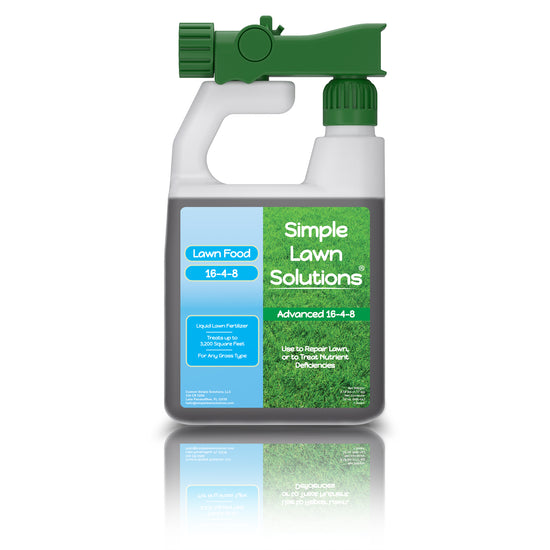
Simple Lawn Solutions 16-4-8 lawn fertilizer contains urea as the source for nitrogen. Additionally, it also contains phosphorus and potassium, making it a complete fertilizer. It also includes organic components such as seaweed and fish emulsions to support nutrient uptake and soil biology. This type of fertilizer is used during spring, summer, or fall to support turf color, growth, and enhanced rooting.
28-0-0 High Nitrogen Lawn Food Fertilizer
28-0-0 lawn fertilizer from Simple Lawn Solutions is a high-nitrogen liquid lawn fertilizer that contains nearly 20% urea as its primary source of nitrogen. This is a great benefit for increasing a greener color rapidly and steadily over the growing season with a slow-release nitrogen, which is also included in the overall nitrogen source.
Darker Green Liquid Iron Fertilizer
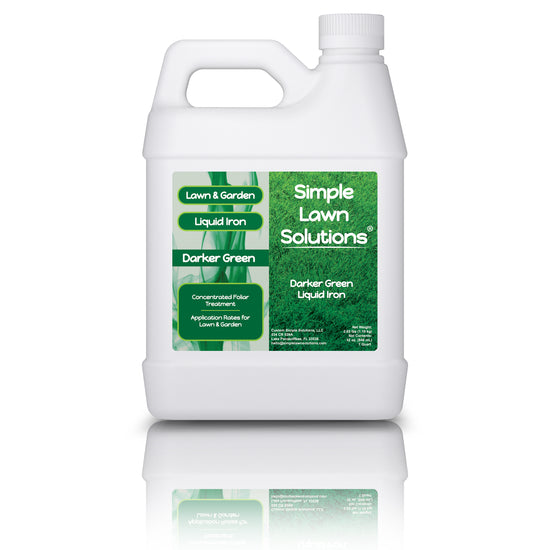
Simple Lawn Solutions Darker Green liquid iron contains a small percentage of urea at 0.75%, but it does assist in boosting lawn color as it is combined with iron and manganese in the overall blend. This is a good supplemental fertilizer to use to maintain color without excessive growth between regular fertilizer applications.
Lawn Energizer Nitrogen and Iron Lawn Fertilizer
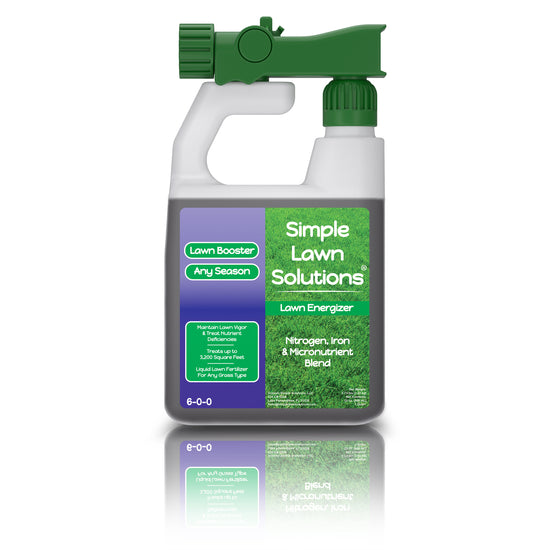
Lawn Energizer is a liquid iron and nitrogen lawn fertilizer designed to enhance turf color and vigor, which also includes a percentage of urea. Additional micronutrients, including magnesium, manganese, and sulfur, provide added benefits for the lawn.
Urea: A Low-Cost Nitrogen Fertilizer
Urea (46-0-0) is produced using an industrial process that combines ammonia and carbon dioxide. Both are widely available, and the production process is more energy-efficient than making nitrate or ammonium fertilizers. Less urea is needed to get the same results as other forms of nitrogen. This means that less product material needs to be transported or stored for manufacturing. Lower production and transport costs equal lower retail costs. Other forms, such as ammonium sulfate (21% N) and ammonium nitrate (34% N), are more expensive to produce compared to urea (46% N).
Urea: Conclusion
Urea is a synthetic form of nitrogen that has been widely used in agriculture, on lawns, in professionally maintained turf, and for gardening. Once urea comes into contact with the soil, it is not readily available to plants. Moisture within the soil or otherwise applied starts to dissolve the granular or liquid form of the material. Once it has been converted to ammonium and nitrate, plants can absorb it more quickly, resulting in rapid greening, vigorous growth, and improved leaf density and color.
Although urea fertilizer has many positive effects on greening and increasing plant growth, it also has some adverse effects. Urea that remains on top of the soil for too long and is not watered in can evaporate very quickly. Nitrogen is then lost into the atmosphere, and the intended amount will not be available to perform all of its great benefits. It will become less effective, and the expected results will not occur. Cool-season grasses utilize urea most effectively in the mid-fall timeframe. Early to midsummer is also a great time to apply urea fertilizer to warm-season turfgrasses. Several Simple Lawn Solution products, such as 15-0-15, 16-4-8, 28-0-0, Darker Green, and Lawn Energizer, contain urea in varying quantities.
FAQs on Urea Fertilizer
What is urea nitrogen in fertilizer?
Urea is a synthetic form of nitrogen that contains 46% nitrogen by weight, making it one of the most concentrated nitrogen sources available. In soil, it converts to ammonium through a process called hydrolysis, which requires moisture and soil microbes. It is widely used in lawn fertilizers because of its high nitrogen concentration and relatively low cost.
Is urea safe to use on lawns?
Yes, urea is safe for lawns when applied at recommended rates with adequate watering. The main risk is fertilizer burn if over-applied or if the lawn is not watered after application. Always follow label directions and water in urea-based fertilizers within 24 hours of application to prevent volatilization and burn.
What is the difference between urea and ammonium nitrate?
Urea (46-0-0) is a higher-concentration nitrogen source that must convert to ammonium in the soil before plants can use it. Ammonium nitrate contains two nitrogen forms, ammonium and nitrate, that are immediately available to plants. Urea is slower to become available but is less prone to leaching, while ammonium nitrate acts faster but can run off more easily.
Does urea need to be watered in?
Yes, urea must be watered in within 24 hours of application. Without moisture, urea undergoes volatilization, converting to ammonia gas that escapes into the atmosphere. Watering immediately after application prevents nitrogen loss and reduces the risk of burn on grass blades.
What does 28-0-0 mean on a fertilizer label?
28-0-0 means the fertilizer contains 28% nitrogen, 0% phosphorus, and 0% potassium. This is a nitrogen-only formula, often urea-based or urea-ammonium nitrate solution (UAN). It is used when lawns need a nitrogen boost for green color and growth without additional phosphorus or potassium.
How much nitrogen does my lawn actually need?
Most lawns need between 2–4 pounds of actual nitrogen per 1,000 square feet per year, split across multiple applications. Cool-season grasses need most of that nitrogen in fall and spring. Warm-season grasses need it primarily during summer. Applying too much nitrogen at once can cause surge growth, thatch buildup, and increased disease pressure.
References:
https://www.fao.org/fileadmin/user_upload/jecfa_additives/docs/Monograph1/Additive-485.pdf
https://www.fertilizer.org/wp-content/uploads/2025/02/2024_ifa_short_term_outlook_report.pdf
https://simplelawnsolutions.com/collections/lawn-food?view=no-usf